Imago
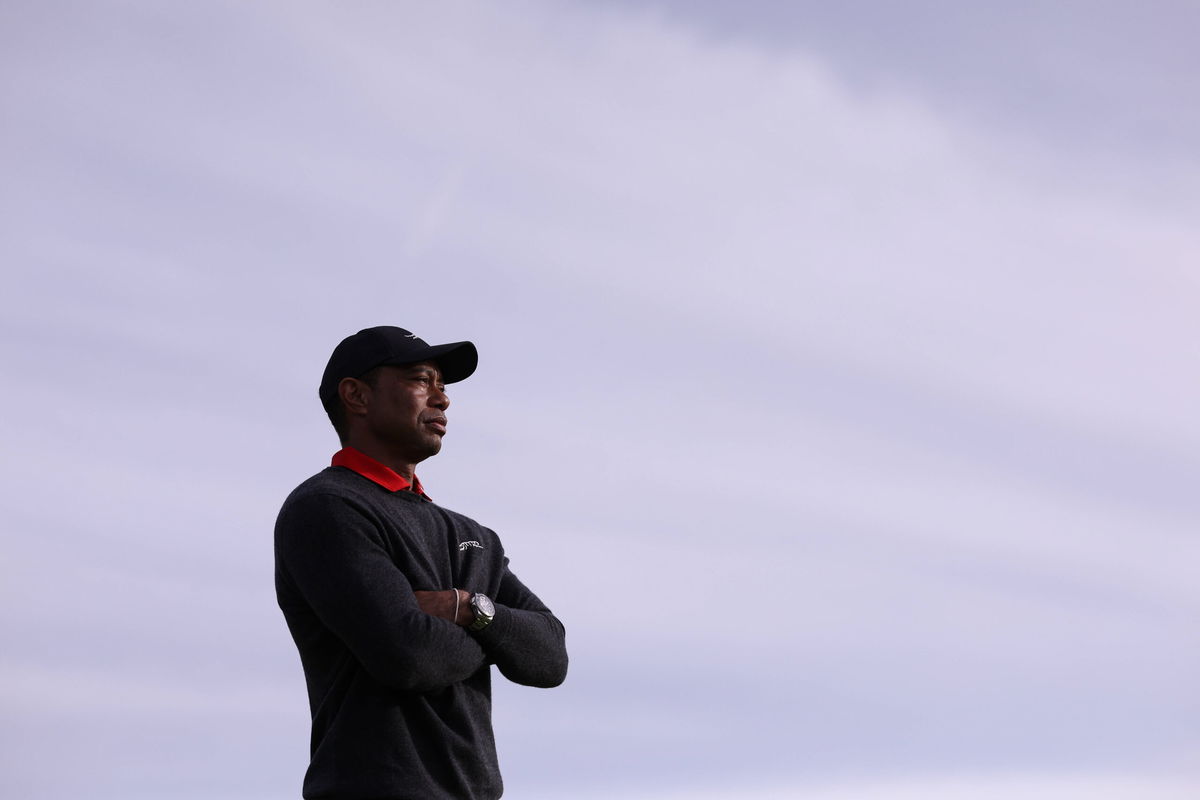
March 27, 2026, Jupiter, Florida, USA: Tiger Woods has been involved in a rollover car accident near his home in Jupiter, Florida, authorities say. Woods has been charged with a DUI and with property damage and refusal to submit to a lawful test. FILE PHOTO SHOT February 16, 2025, La Jolla, California, USA: Tournament host TIGER WOODS looks on during trophy ceremony of the 2025 Genesis Invitational at Torrey Pines Golf Course in La Jolla, California. La Jolla USA – ZUMAt158 20250216_zsp_t158_055 Copyright: xBrentonxTsex
Imago
March 27, 2026, Jupiter, Florida, USA: Tiger Woods has been involved in a rollover car accident near his home in Jupiter, Florida, authorities say. Woods has been charged with a DUI and with property damage and refusal to submit to a lawful test. FILE PHOTO SHOT February 16, 2025, La Jolla, California, USA: Tournament host TIGER WOODS looks on during trophy ceremony of the 2025 Genesis Invitational at Torrey Pines Golf Course in La Jolla, California. La Jolla USA – ZUMAt158 20250216_zsp_t158_055 Copyright: xBrentonxTsex
Just a week ago, things were going fine with Tiger Woods, but in just one afternoon, he flipped the script with yet another car crash and was arrested on DUI charges. And what followed was not just another news cycle. It was a moment that forced the question many had been quietly sitting with for years: Is it actually time for Big Cat to stop after 30 years? Golf Channel analyst Brandel Chamblee did not wait long to answer that.


“Well, why would he need to play golf anymore? I think he should probably ask himself that. Consider not playing golf anymore.” He then went further, adding that “it’s clear since 2021, when he’s come back, that he can’t play at a competitive level on the PGA Tour. His body just won’t let him do what his talents have previously let him do.”
Watch What’s Trending Now!
On the subject of legacy, Chamblee was equally direct: “He’s done his work in the game of golf. Nothing he’s going to do on the Champions Tour will add anything really to his legacy.”
That legacy point is hard to counter, though. Woods won 15 majors and 82 PGA Tour wins, tied for the all-time record, at a 22.8 percent win rate, or nearly one in five events he entered. No Champions Tour title alters that math. His influence on the game no longer depends on trophies. His role in PGA Tour policy discussions and structural decisions has shaped the modern game’s future. That’s what grows his legacy off the course regardless of his performance.
The numbers reinforce why Chamblee’s concern is legitimate. Since the 2021 Los Angeles crash, Woods has played 11 tournaments, finishing within 16 shots of the winner in none of his four 72-hole events. He missed the cut at the U.S. Open and The Open Championship in 2024 and finished 60th at Augusta. His last tournament was the 2024 Royal Troon Open Championship.
🚨🗣️🐅 #NEW — Golf Channel’s Brandel Chamblee is speaking out about the future of Tiger Woods’ golf career, with the outspoken analyst suggesting there’s no need for the 15-time major winner to tee it up on the Champions Tour.
“He’s done his work in the game of golf. Nothing… pic.twitter.com/VjHvBIUwMp
— NUCLR GOLF (@NUCLRGOLF) March 28, 2026
And the build-up to this crash made it hit harder. He had been pushing toward a Masters return after a ruptured Achilles in March 2025 and a seventh back surgery in October 2025. As recently as 2025, even Chamblee admitted he had never seen Woods swing so well since his most recent accident. He added that “nothing gets the golf world more excited than the possibility of Tiger Woods coming back.” But that optimism has vanished.
Chamblee also pointed to Woods’ well-documented training habits as a serious concern.
“He’s up two, three, four in the morning at the gym, grinding it out all day long. This puts a considerable stress on what is already a fractured and fragile body.”
He connected the cycle of injuries to a broader pattern, noting that repeated surgeries bring prescribed pain medication, and stopping short of naming specifics about this incident, said the pattern itself was the concern. It is worth noting that in 2017, Woods checked himself into a clinic for prescription medication following a DUI arrest in Florida, where officers found him asleep behind the wheel.
The timing of all this matters because Woods had only just unlocked a new competitive chapter. He turned 50 on December 30, 2025, making him eligible for the PGA Tour Champions, and had even registered for the 2026 U.S. Senior Open at Scioto Country Club in Columbus, Ohio.
At 50, with a body still recovering, a second DUI charge, and a seventh back surgery barely six months behind him, the debate is no longer really about the Master plan!
Golf has seen this before. But it’s not quite like this.
Can Tiger Woods do what Ben Hogan once did?
Golf has a history of miraculous comebacks, and none is greater than Ben Hogan’s. On February 2, 1949, Hogan’s car hit a Greyhound bus head-on near Van Horn, Texas, breaking his pelvis, collarbone, ribs, and ankle. Doctors said he would never play competitive golf again. Sixteen months later, he won the 1950 U.S. Open at Merion, walking 36 holes in a single day on legs riddled with blood clots. If golf has a blueprint for the impossible, Hogan wrote it.
But the Hogan comparison has a catch. Hogan was 36 at the time, still inside his physical prime. So, rebuilding from one single catastrophic event was a big deal, but not impossible. Woods is 50, returning from seven back surgeries, a reconstructed right leg, a ruptured Achilles, and now a second DUI arrest. Age alone does not disqualify a comeback, but age combined with a decade of compounding damage is a different equation entirely.
Moreover, we have seen the Big Cat do the impossible before. In 2019, Woods won the Masters after a back injury, silencing every doubt. That comeback is the one reason the door cannot be fully closed on him.
Modern medicine does give Woods something Hogan never had. Advanced imaging, surgical precision, and rehabilitation methods did not exist in 1950. That is a genuine advantage. But Hogan adapted his game to his limitations and still won majors. Woods is not yet at the point where adaptation is on the table. He is still fighting to get healthy enough to compete.
Can he do the impossible? That is the question.
Written by

Edited by

Yogesh Thanwani