
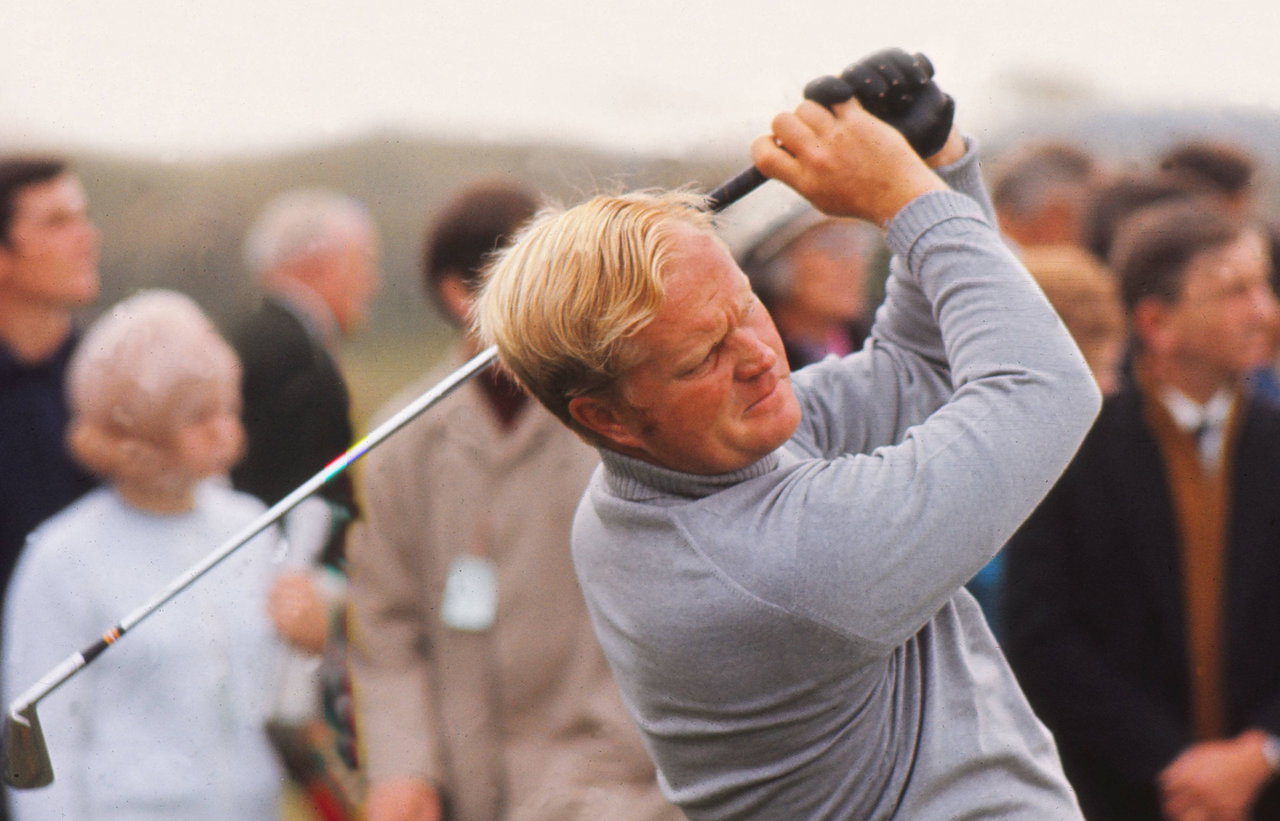
On a grey September evening in 1969, more than 10,000 spectators crowded around the 18th green at Royal Birkdale, knowing that one short putt would decide the Ryder Cup. Great Britain and Ireland and the United States were level at 15½ points each, and the final match between Tony Jacklin and Jack Nicklaus stood all square. But this was no ordinary sporting climax. The week had been marked by hard words, disputed putts, and near-physical confrontations, and the tension had followed them to the final green.
Watch What’s Trending Now!
To understand why Nicklaus’s gesture became so famous, it helps to understand what the Ryder Cup was in 1969.
1969 Ryder Cup Was Tense
It was a biennial contest between the United States and Great Britain and Ireland, and the Americans had dominated it for more than a decade, winning five straight editions. Britain and Ireland had not lifted the trophy since 1957, and their captain, Eric Brown, wanted his players to compete without being intimidated.
Brown set the tone before play began, telling his team not to help the Americans search for balls in Royal Birkdale’s thick rough. He wanted to ensure the visitors received no advantage, however small. He later admitted he had not fully understood the rules’ implications of that instruction, but the message was clear: this would not be a polite exhibition.
The tension soon became visible. In the foursomes, American Ken Still took exception when Maurice Bembridge asked him to move away from his line of sight on the 13th tee. Still responded by pointedly asking spectators to move too before hooking his tee shot into trouble. It was a minor incident, but it showed how quickly tensions were escalating.
Tensions escalated during the fourballs, when Still and Lee Trevino faced Bernard Gallacher and Brian Huggett. A dispute over putting order led Still to pick up Gallacher’s ball marker and throw it toward him.
“You can have the hole and the goddamn Cup!” Still reportedly said.
The Final Match
Despite the hostility, Britain and Ireland took the contest to the final day, with both teams level at 15½ points. Every singles match mattered. Jacklin, the reigning Open champion and Britain’s biggest star, carried much of the home side’s hopes.
He was paired against Nicklaus twice on the final day. In the morning, Jacklin beat him 4&3, giving Britain hope of an outright victory. In the afternoon, the two met again in the decisive match, with the overall score still tied and the Ryder Cup effectively hanging on their result.
Nicklaus was already the world’s best player, but this was his first Ryder Cup. He and Jacklin had become friends after meeting at the 1966 World Cup in Japan. Still, neither could escape the pressure of playing for a trophy their countries desperately wanted.
As they walked up the final hole, Nicklaus asked Jacklin how he was feeling. “Bloody awful,” Jacklin admitted. Nicklaus’s reply was equally honest: “So am I.”
The match remained finely balanced. Nicklaus birdied the 16th to move one up, but Jacklin answered with a 35-foot putt at the 17th to send the match to the last hole all square. Jacklin’s long birdie attempt at the 18th then stopped just short, leaving him with the short par putt that would decide the Ryder Cup.
Nicklaus first had to deal with his own putt. His birdie attempt raced several feet past the hole, leaving him with a difficult return putt. After holing it, Nicklaus left Jacklin needing to make his short putt to halve the match and keep the Ryder Cup tied.
Nicklaus then made his decision. He walked over, picked up Jacklin’s marker and conceded the putt.
“I don’t think you would have missed it, but I wasn’t going to give you the chance, either,” he told him.
The match was halved, the Ryder Cup finished 16-16, and the United States retained the trophy because it had won the previous edition in 1967.
Why Nicklaus’s Gesture Still Matters
Nicklaus’s concession was not an act of weakness. By conceding the putt, he gave up the possibility of an American victory if Jacklin missed. He later explained that he did not want the British hero to carry the memory of missing a two-foot putt that decided the Ryder Cup.
The gesture stood out all the more because of the week that preceded it. A Ryder Cup filled with arguments, intimidation, and near-fights could have ended with an American victory secured by a British mistake. Instead, Nicklaus made sportsmanship the defining image of an otherwise bitter event.
The moment has endured far beyond 1969. The Nicklaus-Jacklin Award was later created to honor sportsmanship in golf, and Nicklaus and Jacklin co-designed a Florida course named “The Concession” after the famous 18th green at Birkdale.
To end, it’s interesting to know that the marker Nicklaus picked up that evening became part of golf history, later selling at auction for a remarkable sum. But its real value was never monetary. In a Ryder Cup defined by feuds and near-fights, Nicklaus’s simple gesture gave the sport a lasting answer to the question of what winning should look like.