
Imago
Image Courtesy: IMAGO
Imago
Image Courtesy: IMAGO
Almost four weeks ago, the sports world watched the 2026 FIFA World Cup final unfold across television and digital platforms. The final was held at New York-New Jersey Stadium in East Rutherford, setting the stage for one of the biggest sporting events of the year. But just before the match, Scott Ferrall, host of the Ferrall & The Prophet podcast, posted on X that the average ticket price for the final was expected to reach $11,327, making it the most expensive ticket in U.S. sports history. That figure even surpassed the average price for any Super Bowl. And the final was hardly the only time ticket prices reached staggering levels during the 2026 World Cup.
Watch What’s Trending Now!
For example, the cheapest available ticket for the Mexico vs. England game reportedly cost $4,585, despite the stadium having a capacity of more than 87,000. But if you think the 2026 World Cup was simply an exception, think again. The get-in price for the Knicks vs. 76ers season opener, for instance, is reportedly $1,999, making it the most expensive NBA home opener ever. But brace yourself if these numbers seem shocking to you because some recent data puts the cost of being a sports fan into an even bigger perspective.
A study published in August 2026 by Casino Streamers compared the annual costs of following major sports, including football, tennis, basketball, golf, soccer, and others. The study offers a deeper look at just how much fans may spend each year to follow the sports they love, and the NFL emerged as the costliest sport.
The financial cost of being an NFL fan
According to Casino Streamers, American football is the most expensive sport in the study, costing fans about $982 per year. The kicker is the NFL’s ticket price, while it has gone up, isn’t the key driver of the cost. In fact, UFC, F1, and Boxing tickets cost way more than NFL. Then how has the annual cost climbed this high?
Streaming is a major reason.
The annual streaming cost for the NFL is now about $696, accounting for nearly 71% of the total yearly expense. The reason is what has irked most fans: split streams. Following the NFL often requires multiple streaming services, with subscriptions to platforms such as ESPN, Amazon Prime, Netflix, and Peacock adding up quickly.
Now you factor in the cost of attending games.
According to the Action Network, a family of four going to a Buffalo Bills game this season was likely to spend nearly $2,200 for a single game day, making Highmark Stadium the most expensive NFL stadium for families. For comparison, four tickets cost $886.30 in 2018, compared with $1,982.80 for four resale tickets today. That’s a 123.7% increase in just eight years.
Then comes merchandise. According to the Casino Streamers study, a Nike limited-edition jersey costs about $150, adding another significant expense for football fans. The study says, “NFL supporters spend close to $1K a year to keep up with the league, more than any other sport on this list.”
The second-most expensive sport to follow is a surprise, however.
Tennis is a huge competition
Last year, the US Open final made the headlines for all the wrong reasons. It had the most expensive ticket in tennis history. And the trend hasn’t stopped.
The tournament is just six days away, and according to TicketData, the average get-in price is already $322, up from $256 around the same time last year. The average price has jumped 17.3% over the past 30 days and has been steadily climbing for nearly two months, rising from about $260 at the beginning of June.
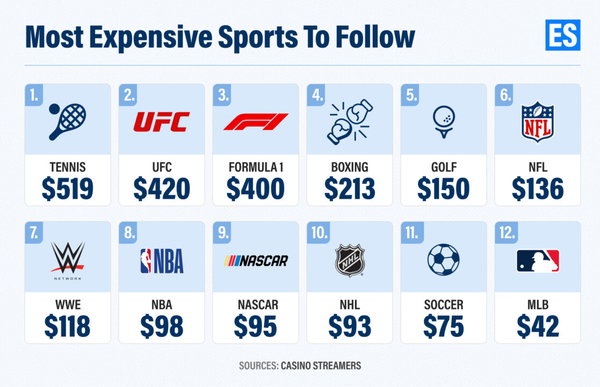
Now, according to Casino Streamers’ data, tennis ranks as the second-most expensive sport to follow, requiring an average annual investment of $929 per fan. Much of that cost comes from the steep price of attending live events. In fact, a Grand Slam ticket averages $529, making it the most expensive single-game entry in the entire study. Interestingly, tennis merchandise remains relatively affordable at around $40.
However, the contrast becomes clearer when streaming costs enter the picture. Tennis fans spend about $360 a year on streaming, meaning they pay more for the live experience, while football fans face a heavier financial burden just to watch games consistently from home.
And now, the next sport on the list might surprise you even more.
Formula 1’s viewing experience comes with a lot of burden
Ticket prices across the Formula 1 calendar can vary dramatically depending on the race location, seating tier, and demand. The Las Vegas Grand Prix, for example, has one of the highest average ticket costs, with the price hovering around $1,156. Standard grandstand tickets average more than $1,300, while premium packages can easily top $2,000.
Now, look at the United States Grand Prix in Austin, and the numbers are noticeably different. General admission passes start around $420–$450, while standard grandstand tickets average roughly $775–$950.
But what does Casino Streamers’ analysis tell us?
According to the study, Formula 1 costs fans approximately $606 per year. That includes an average ticket cost of $400, about $50 in merchandise, and $156 for streaming. However, that $400 ticket price doesn’t include the additional costs of traveling to a race, booking a hotel, or paying for food and other expenses. In reality, attending an F1 race can cost considerably more than the study’s headline figure, especially when you factor in the sport’s international destinations and premium race-weekend atmosphere.
So, which sport puts the least pressure on fans’ wallets while still allowing them to follow the action?
Baseball is still pocket-friendly
Major League Baseball (MLB) ticket prices generally offer one of the most accessible entry points in professional sports, with regular-season tickets averaging around $35 to $75 per seat. Entry-level upper-deck or outfield bleacher seats can often be found for as little as $10 to $35 in smaller markets such as Miami, Cincinnati, or Anaheim. Lower-level infield seats typically range from $45 to $150, while premium club-level seats can climb beyond $150 and even reach $400 or more.
Of course, prices vary significantly based on team demand. Major-market franchises such as the Los Angeles Dodgers, Boston Red Sox, and Chicago Cubs command some of the highest average prices, with a family outing—including tickets, parking, and concessions—often costing more than $300 to $400.
MLB teams also rely heavily on dynamic pricing and secondary resale markets, meaning prices can spike for marquee weekend matchups, Opening Day, and playoff games. On the other hand, they can drop sharply in the final hours before first pitch on resale platforms. Casino Streamers’ analysis points in the same direction.

Imago
MLB, Baseball Herren, USA Storm Vs Tower Buzzers MAY 02 May 2, 2026: Ontario s Brady Smith 49 during the Minor League Baseball game at ONT Field in Ontario, California between the Lake Elsinore Storm and the Ontario Tower Buzzers at ONT Field in Ontario, California. Lake Elsinore won the game, 4-2. Josh Thompson/CSMCredit Image: Josh Thompson/Cal Media Ontario California USA EDITORIAL USE ONLY Copyright: xx ZUMA-20260502_faf_c04_034.jpg JoshxThompsonx csmphotothree489390
According to the study, baseball costs fans only about $390 per year, with an average ticket price of $42. That’s dramatically lower than tennis, Formula 1, UFC, and the NFL. And because MLB teams play so many games, fans have far more opportunities to attend without paying premium prices for every experience. It creates an interesting business paradox: MLB offers more live inventory while charging less for each individual game.
But the report isn’t just about numbers and comparisons. There’s a bigger business factor behind the rising cost of being a sports fan, and that’s what drives the price higher.
The business angle controlling each component
From a business perspective, a sports fan is both a highly engaged consumer and a key driver of value in a global sports industry worth more than $520 billion. Unlike typical consumers, fans are often buying identity and belonging, which makes them willing to pay premium prices for official merchandise, tickets, and stadium concessions. A $120 jersey, for example, can cost far less to manufacture, while dynamic ticket pricing and game-day spending can push the cost of a family outing well beyond $300 or $400.
Sports organizations also monetize that emotional connection through massive media-rights deals, targeted direct-to-consumer data, sponsorships, and the multibillion-dollar sports betting industry. The NFL’s landmark 11-year, $110 billion broadcast deals are a prime example. Ultimately, fan loyalty fuels everything from local hospitality and merchandise sales to corporate sponsorships and soaring team valuations.
So, when all these costs are added up, following the biggest sports can easily cost a fan more than $2,000 a year. And unfortunately, there doesn’t seem to be any immediate relief in sight.
Written by

Edited by

Parnab Bhattacharya