
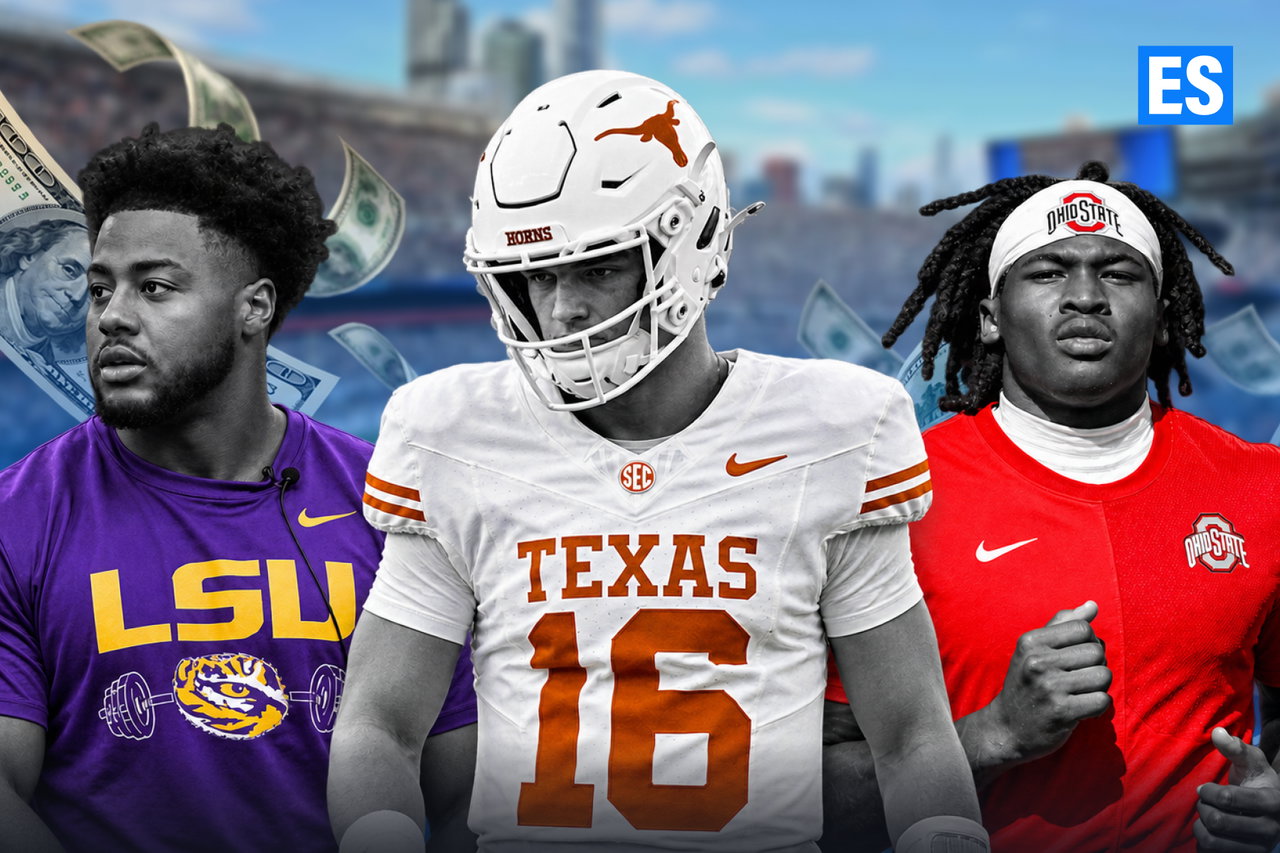
NIL has changed college football. Schools are no longer competing only on the field. They are also fighting to attract and retain top talent, with money playing a bigger role than ever. Beyond payments from schools and collectives, sponsorships and brand deals have opened up another source of income for players. For athletes like Arch Manning and Bryce Underwood, the opportunity is no longer just about preparing for a professional career. It is also about building a personal brand while they are still in college.
Watch What’s Trending Now!
Since 2021, college football has been debating whether NIL is a boon or a bane for the sport. For players, though, it has created opportunities that were previously out of reach. Bryce Underwood is a good example. He flipped his commitment from LSU to Michigan amid reports of a $10.5 million NIL deal, showing just how much money can influence recruiting decisions.
Through brand partnerships, social media promotions, and licensing agreements, players can earn money from the use of their names, images, and likenesses on products such as trading cards and video games. And some players are finding ways to make the most of these opportunities.
Arch Manning and the Power of a Marketable Name
Arch Manning arrived at Texas with plenty of attention already surrounding him. As the grandson of Archie Manning and nephew of NFL legends Peyton and Eli Manning, he had a recognizable name long before he became the Longhorns’ starting quarterback.
In 2024, Manning stepped in for Quinn Ewers while Ewers dealt with an oblique strain. He took over as Texas’ starting quarterback in 2025, bringing even more attention to his performances. His family name, his time at a high-profile program, and his rise to the starting role have all helped build his public profile and attract brand interest.
Imago
Player image courtesy: Imago
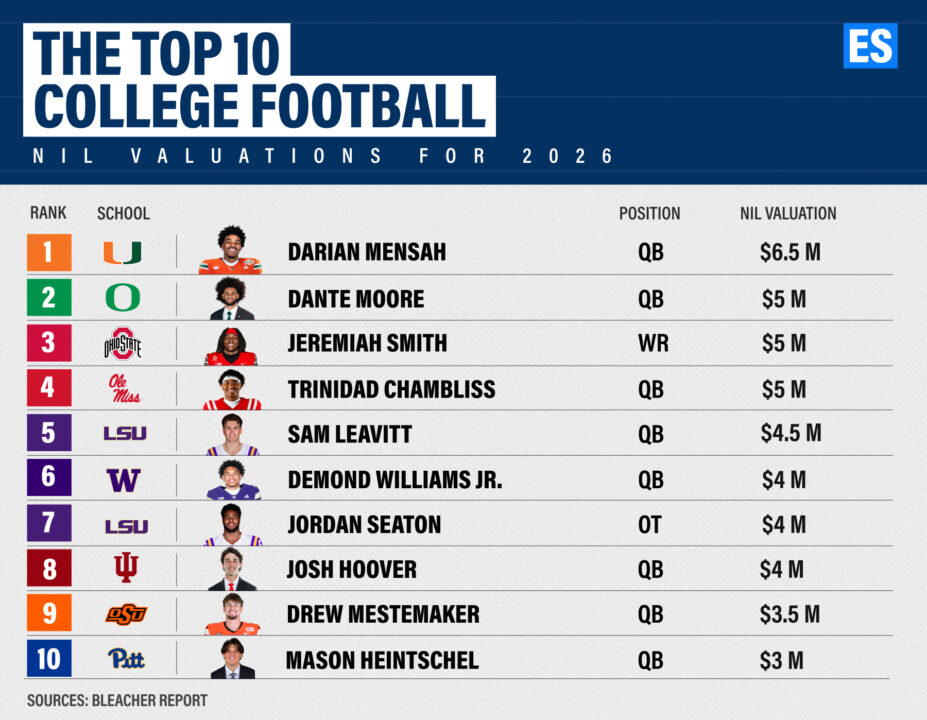
That attention was reflected in his NIL valuation, which reached $6.8 million for the 2025-26 season, according to On3. Manning also secured partnerships with Red Bull and Raising Cane’s during the 2025 season and appeared in an Uber/Waymo promotional video. He later signed deals with clothing brand Vuori and eyewear company Warby Parker.
His social media presence added to that appeal, with 6,51,000 Instagram followers and 17,600 followers on TikTok.
For brands, Manning offers more than his performances on the field. His family name, college football profile, and growing audience make him an attractive partner.
But that level of attention isn’t available to every player. Athletes at smaller programs often have fewer opportunities to reach large audiences.
The School Premium: Does Playing for a Big Program Make You More Valuable?
A player’s NIL opportunities can depend partly on how much a school and its associated collectives are willing to invest in recruiting and retaining talent. Take Georgia, for example. The Bulldogs were among the programs competing with Oregon, Miami, and Ohio State for five-star offensive tackle Jackson Cantwell. He ultimately chose Miami, reportedly after the program offered around $2 million.
Miami also landed Carson Beck from Georgia ahead of the 2025 season in a deal reportedly worth $4 million. These examples show how financial offers can influence where players choose to play, although the figures involved and the terms of individual deals can vary.
Once a player joins a high-profile program, the exposure can bring further opportunities. Regular media coverage and nationally televised games can help turn a college athlete into a recognizable name. Indiana’s former quarterback Fernando Mendoza is one example.
Before his breakout season, Mendoza was not a household name nationally. He then helped lead Indiana to a championship, won the Heisman Trophy, secured deals with Adidas and Dr Pepper, and was selected first overall in the 2026 NFL Draft.
Players at smaller programs often have to take a different route. Cal Poly, for instance, reported combined NIL earnings of around $16,000 from 2021 through July 2024, according to CalMatters.
Rather than wait for brands to approach him, junior safety Brian Dukes Jr. decided to build his own platform. In fall 2024, he launched the Dukes Up Podcast on Spotify, giving him a way to showcase his personality and interests beyond football.
The idea soon began opening doors. In March 2025, Dukes partnered with local restaurant Benny’s Pizza and Social Club for a live podcast event featuring other Cal Poly athletes.
His experience shows how players outside the biggest programs can create opportunities for themselves. And social media can play a major role in making that possible.
Social Media Is the Athlete’s Shop Window
Social media has given college athletes another way to reach potential sponsors. Even players from smaller programs can build an audience on Instagram and TikTok and use that reach to attract brand deals.
But having a large following doesn’t automatically translate into sponsorships.
A 2025 study by Cap Henneman, published in The Elon Journal, examined how 15 college football players used Instagram and TikTok in 2023. The researcher analyzed 622 posts, including 226 on Instagram and 396 on TikTok, to understand what types of content athletes shared and which posts attracted the most attention.
The study grouped the posts into three categories:
- Athletic Performance
- Attractive Appearance
- Marketable Lifestyle
The results showed that different types of content performed differently across the two platforms.
On Instagram, Athletic Performance posts received an average of 61,876 likes. Marketable Lifestyle posts averaged 42,515 likes, while Attractive Appearance posts averaged 29,444.
On TikTok, Attractive Appearance posts performed best, averaging 24,517 likes. Marketable Lifestyle posts received an average of 19,670 likes, followed by Athletic Performance posts at 18,664.
The findings suggest that the content that attracts attention on Instagram may not perform as well on TikTok, and vice versa. For athletes trying to build their brands, understanding those differences can help them decide what to post and where.
Engagement also matters. Brands may look beyond follower counts to see how often people like, comment on, and share an athlete’s content, who those followers are, and whether they are likely to be interested in the products being promoted.
Chase Griffin is a good example of how a player can attract sponsorships without being a star on the field. As a backup quarterback at UCLA, he had 27,700 Instagram followers and 12,200 Twitter followers in 2021. Yet he secured brand deals with companies including Degree, Shell, Boost Mobile, Clearcover, and Discord.
Griffin’s engagement helped him stand out. Over one year, his Instagram posts received 92,784 engagements, including likes and comments, more than five times the average for UCLA athletes.
His experience shows that a player’s value to a brand isn’t necessarily tied to their role on the depth chart. An athlete who can connect with an audience may offer companies something that a more prominent player cannot.
Still, NIL opportunities are far from equal. While a handful of college football stars attract deals worth millions, many players earn considerably less or struggle to secure major sponsorships at all.
A player’s earnings can depend on several factors, including performance, position, social media engagement, personal brand, and the exposure that comes with playing for a major program. Brands want athletes who can attract attention and connect with potential customers, and not every player has the same reach.
NIL has opened new doors for college football players, but the biggest rewards still tend to go to those with the strongest market appeal. For athletes hoping to make the most of those opportunities, building a following is only part of the job. They also need to give that audience a reason to pay attention, both on and off the field.