
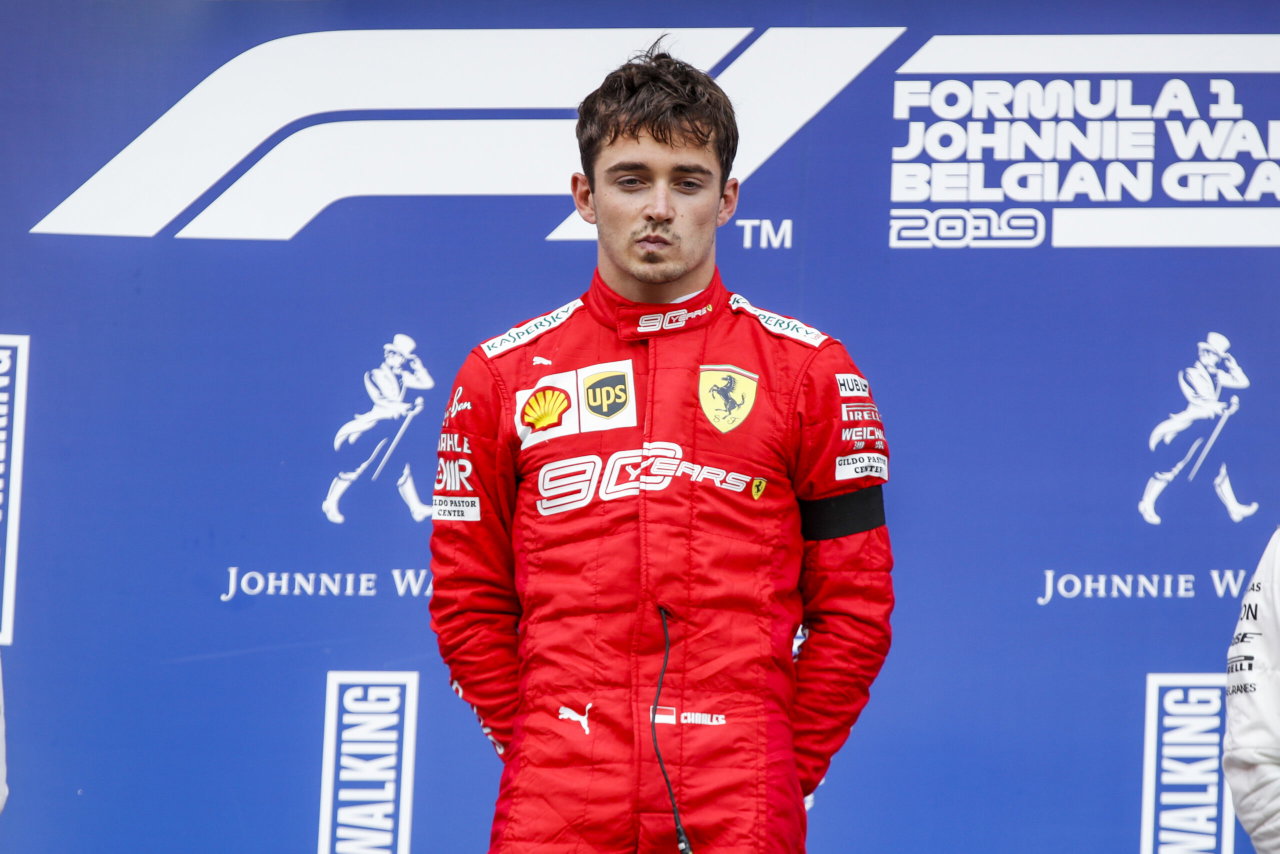
A comment made after the Mexican Grand Prix has escalated into one of Formula 1’s most high-profile media disputes of the season. What began as a newspaper columnist’s criticism of Charles Leclerc has now turned into a debate about journalistic standards, media access, and press freedom inside the sport.
Watch What’s Trending Now!
The FIA, Formula 1’s governing body, has withdrawn the media accreditation of Daily Mail journalist Jonathan McEvoy for the remainder of the 2026 season after an opinion column about Ferrari driver Charles Leclerc.
Informed in writing on Thursday, November 12, McEvoy will miss the final three Grand Prix in Las Vegas, Qatar, and Abu Dhabi. He has covered Formula 1 for more than two decades.
The FIA’s decision was linked not to McEvoy’s criticism of Leclerc’s driving itself, but to the language he used while expressing that criticism, which officials said fell below the professional standards expected of accredited media members.
The Athletic reported that the FIA revoked McEvoy’s credentials, prompting the Daily Mail to criticize the move as an attack on press freedom.
“An F1 reporter has been banned from the final three races of the 2026 season after calling Ferrari’s Charles Leclerc a ‘sneaky little b*****d’ in a column. The FIA revoked Daily Mail journalist Jonathan McEvoy’s media credentials, prompting the publication to condemn the decision as an attack on press freedom,” The Athletic posted on X.
The dispute stems from a column McEvoy published in the Daily Mail on November 4, in which he used the phrase about Leclerc after the Mexican Grand Prix.
At the Mexican Grand Prix, Leclerc had clashed with teammate Lewis Hamilton in the opening corners, hurting Ferrari’s chances of victory. Red Bull’s Max Verstappen eventually won after Leclerc received a penalty and Verstappen held off Hamilton. The Ferrari teammates had also clashed at the start of the Italian Grand Prix in September.
During the Mexico race, Hamilton voiced his frustration over team radio, telling his engineer, “We’ve got big problems, big, big problems.”
McEvoy later described his remark about Leclerc as, “light-hearted” and “joshing,” according to The Athletic.
FIA Explains Its Decision
In a letter to McEvoy, FIA general manager Alberto Villarreal said the article fell short of the professional standards expected of accredited media representatives.
According to the FIA, the issue centered on the manner in which McEvoy expressed his views rather than the fact that he criticized a driver. The newspaper’s head of sport, Chris Dean, criticized the FIA’s decision and described it as an attack on press freedom.
The disagreement has since evolved beyond the original column and into a broader argument over how governing bodies should handle media criticism.
McEvoy later alleged in another column that Ferrari team principal Fred Vasseur had complained to the FIA about his remarks. However, a Ferrari source denied to The Athletic that Vasseur had made such a complaint, contradicting McEvoy’s allegation.
An FIA spokesperson referred the publication to McEvoy’s reporting when approached for comment.
Another F1 Media Flashpoint
The episode follows another disagreement between Verstappen and the media in March 2026.
The Red Bull driver refused to take part in a press conference until Giles Richards, a long-time Formula 1 reporter for The Guardian, left the room.
Richards had asked about Verstappen’s collision with George Russell during the 2025 season. Verstappen eventually missed a fifth consecutive title by two points, with McLaren’s Lando Norris winning the championship.
While the two incidents are different in nature, both have contributed to a growing discussion about the relationship between Formula 1 personalities and the journalists who cover them.
McEvoy’s absence from the final three races has prompted questions about the FIA’s treatment of accredited journalists and the limits of acceptable commentary from credentialed reporters.
McEvoy’s Response and Vasseur Allegations
The controversy intensified after McEvoy publicly addressed the situation in a follow-up column.
According to F1 Chronicle, McEvoy used the piece to question Fred Vasseur’s role in the matter while also revisiting their previous interactions.
“That tubby little nobody called Fred Vasseur, the Ferrari team principal, had grassed on me, it seems. A chuckling buffoon well out of his depth at the world’s most prestigious team, he is a prickly character and I don’t like him and he doesn’t like me,” McEvoy wrote.
McEvoy also pointed to his repeated interactions with Vasseur over the years.
“He is the only thoroughly rude individual I have met across the nearly 400 grands prix I have attended. I have, as you may have detected, pointed out some of his shortcomings,” he added.
With McEvoy publicly voicing his grievances, the disagreement has added another layer to tensions between the journalist and Ferrari’s leadership. However, Vasseur’s alleged involvement remains disputed, leaving the situation without a confirmed explanation.
What is certain is that McEvoy will miss the final three races of the 2026 campaign, while the debate surrounding journalistic standards and press freedom in Formula 1 continues.