
Imago
via Imago
Imago
via Imago
Essentials Inside The Story
- Terence Crawford explains why Muhammad Ali’s decline played a role in his decision to retire early.
- He admits the fear of long-term brain damage made further success and paydays feel meaningless.
- Crawford says watching Ali struggle later in life convinced him boxing glory isn’t worth losing independence.
Doesn’t every boxer dream of achieving the success Muhammad Ali enjoyed? Heavyweight champion, political icon, one of the greatest athletes the world has ever seen, and so much more. They certainly do! However, the three-division undisputed champion Terence Crawford fears exactly that. But why?


‘Bud’ retired from the sport earlier this year with a perfect undefeated record after beating one of the greatest boxers of the current generation, Saul ‘Canelo’ Alvarez. While he had plenty of options to further his legacy and earn some big paychecks, he chose to end things sooner—precisely because of what happened to Ali.
Watch What’s Trending Now!
Terence Crawford wants to be able to take care of himself
“We all look up to Ali as the most iconic boxer ever, and to see him deteriorate [as] he did, we don’t want to be like that,” Crawford told Ryan Clark and Channing Crowder on the Pivot Podcast. Muhammad Ali famously suffered from Parkinson’s disease, diagnosed in 1984 at age 42, just three years after retiring from boxing, a condition many attribute to the damage he took inside the ring.
To say he was a shell of his former self in his later years would be an understatement. The disease progressively limited Ali’s physical abilities and speech, transforming the once agile, outspoken, and articulate individual into a quieter figure who moved slowly and couldn’t stand or speak on his own.
He lived with the worsening condition for over 30 years until he died in 2016 at the age of just 74. And Terence Crawford doesn’t even want to imagine living like that. “You’re the greatest fighter of all time, but you can’t even take care of yourself. You can’t even wash your own a—,” Crawford continued. “Do I want to go through that? Is it worth it? No, it’s not! It’s not worth it.”
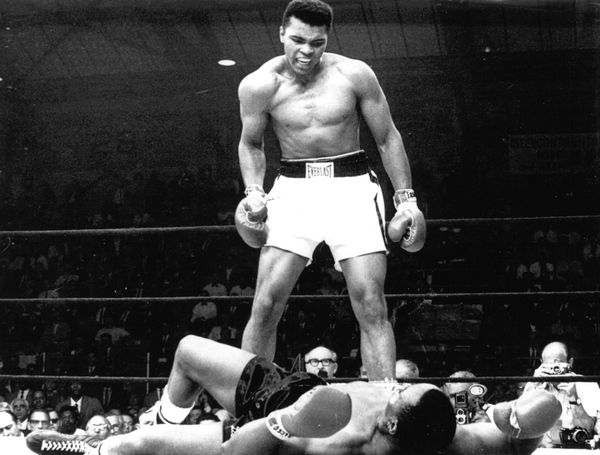
Imago
PALUPI Muhammad Ali Cassius Clay in the boxing ring standing over Sonny Liston 1965 PUBLICATIONxINxAUSxGERxSUIxONLY Copyright: xTopFotox Sp000451
‘Bud’ highlighted that boxers often ignore the damage they take in their prime. And warned that the punishment today will come back to bite them in the future. “That’s going to show up 5 years later,” Crawford told Clark and Crowder during the podcast. He claimed that fighters aren’t “unbreakable,” they are just good at enduring it because of “our family.”
This philosophy is also reflected in his fighting style, as he took far less damage throughout his boxing career, thanks to the skills he developed. And Crawford’s fears aren’t far-fetched. The sport is filled with former champions who deteriorated in the later years of their lives. Not to mention the in-ring deaths in boxing.
Regardless, what did Ali himself feel about his condition?
Muhammad Ali claimed he was a prisoner in his own body
Before his death, Ali’s longtime manager, Gene Kilroy, revealed living with Parkinson’s disease made Ali feel like “a prisoner in his own body.” Despite the severe physical limitations caused by the illness, Kilroy stressed that Ali’s mind remained unaffected. “Mind is good,” Kilroy said.
“It’s hard seeing him as he is today. He can just about walk, and his speech is slurred. It takes huge effort for him to make the simplest communication now, but when he does, every word is worthwhile,” Kilroy added. Ali reflected on his condition with honesty and faith.
“Maybe God is punishing me for some of the things I didn’t do right,” he told Kilroy, before adding that he believed God would ask not what a person had done, but “what you could’ve done.”
Muhammad Ali’s tale is one of pride, yet tragedy accompanied it closely behind, something Terence Crawford wants to avoid. Do you agree with him?
Written by

Edited by

Gokul Pillai